Open-source hardware, tools, and utilities for photographers.
Free calculators, browser-based photo utilities, and DIY camera hardware, all built in the open.
What OpenCameraLab is
OpenCameraLab is a free reference for photographers who would rather understand their equipment than just point it at things. It brings together three kinds of resource that usually live in three different corners of the internet: printable camera hardware, the optical and exposure maths that photographers actually use in the field, and small tools for inspecting the files a camera produces.
None of it needs an account, none of it is behind a paywall, and nothing you upload to the utilities ever leaves your computer. The calculators run on real formulas rather than lookup tables, and every one of them shows the equation it used and explains the assumptions baked into it, so you can check the result instead of trusting it blindly.
The hardware side exists because camera accessories are absurdly overpriced for what they are. A rear lens cap is a moulded disc of plastic that costs more than the filament to print fifty of them. An adapter that lets a forty-year-old lens focus to infinity on a modern body is a machined ring with a thread on each side. If you have a 3D printer, most of the small parts a photographer buys can simply be made.
Where the designs come from. Most of the models catalogued here were published by other makers on Thingiverse and Printables under open licences. Where that is the case, every project page names the original designer, links to the source listing, and states the licence the file was shared under. We host them so that they are searchable, previewable in 3D, and documented in one consistent place, but the credit for the design belongs to whoever drew it.
Explore the site
Projects
58 printable designs
Lens adapters, rear and body caps, battery cases, lens hoods, grips, rigs, filter holders, and tripod hardware. Every project lists what you need to build it, the filament we suggest and why, a 3D preview you can spin in the browser, and a direct download of the model files.
Calculators
18 photography calculators
Depth of field, hyperfocal distance, magnification, diffraction, field of view, equivalent focal length, exposure equivalents, ND filter times, the NPF rule for stars, print sizes, and time-lapse planning. Each one keeps your last values and explains the formula underneath.
Utilities
2 browser-based tools
Drop in a photo and read the full EXIF record from it, including lens, exposure, and GPS data, or check a camera's shutter actuation count where the manufacturer stores it in the file. Both run entirely in your browser, so the photo is never uploaded anywhere.
Featured projects
A cross-section of the catalogue: mount adapters that keep infinity focus, a filter holder that sits inside the camera throat, and rigs and grips you can size to your own hands.
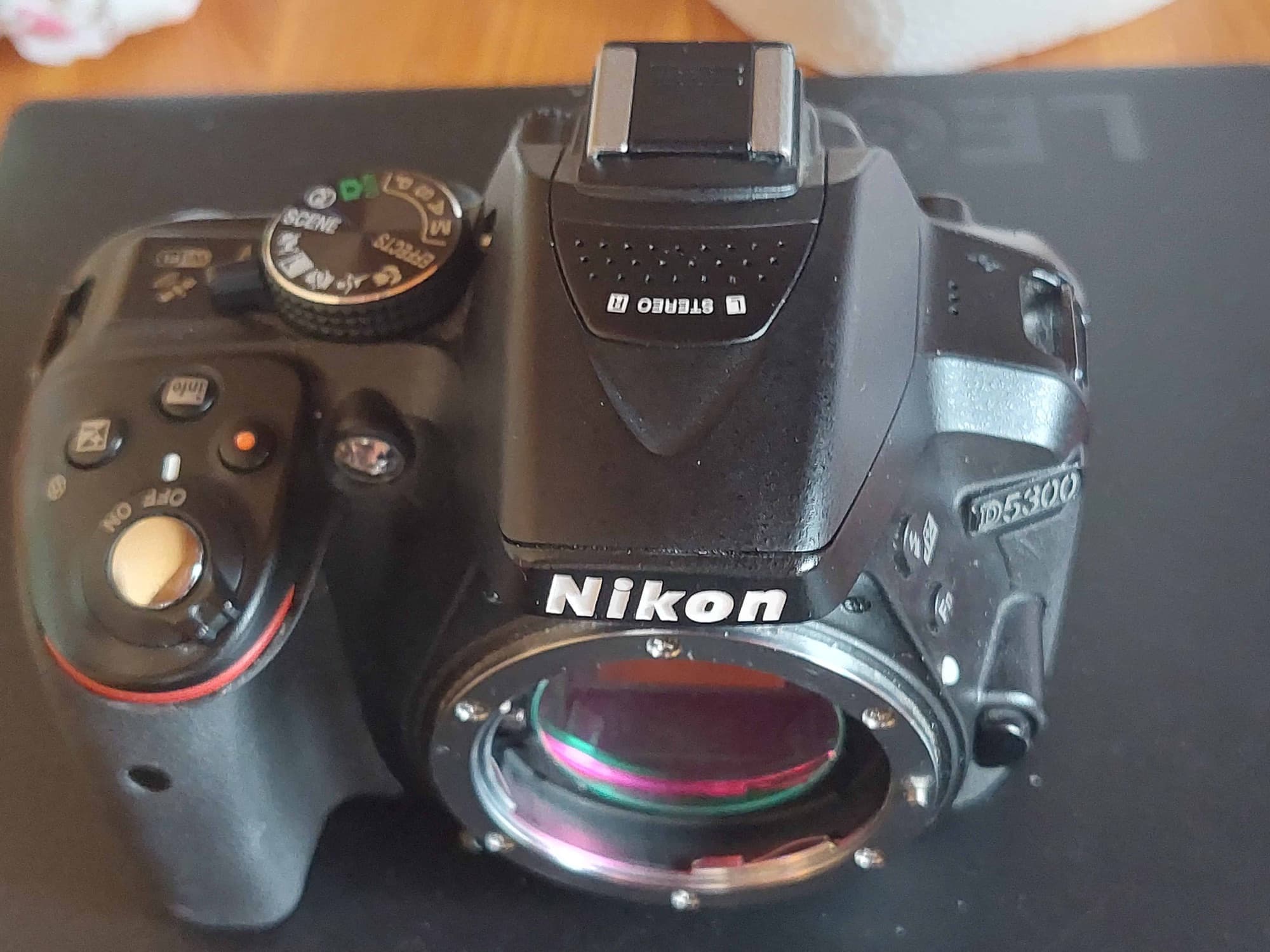
Nikon APS-C Clip-In Adapter for 36mm Astro Filters
A clip-in mount that holds an unmounted 36mm astro filter in front of the shutter on a full-spectrum-converted Nikon APS-C DSLR.
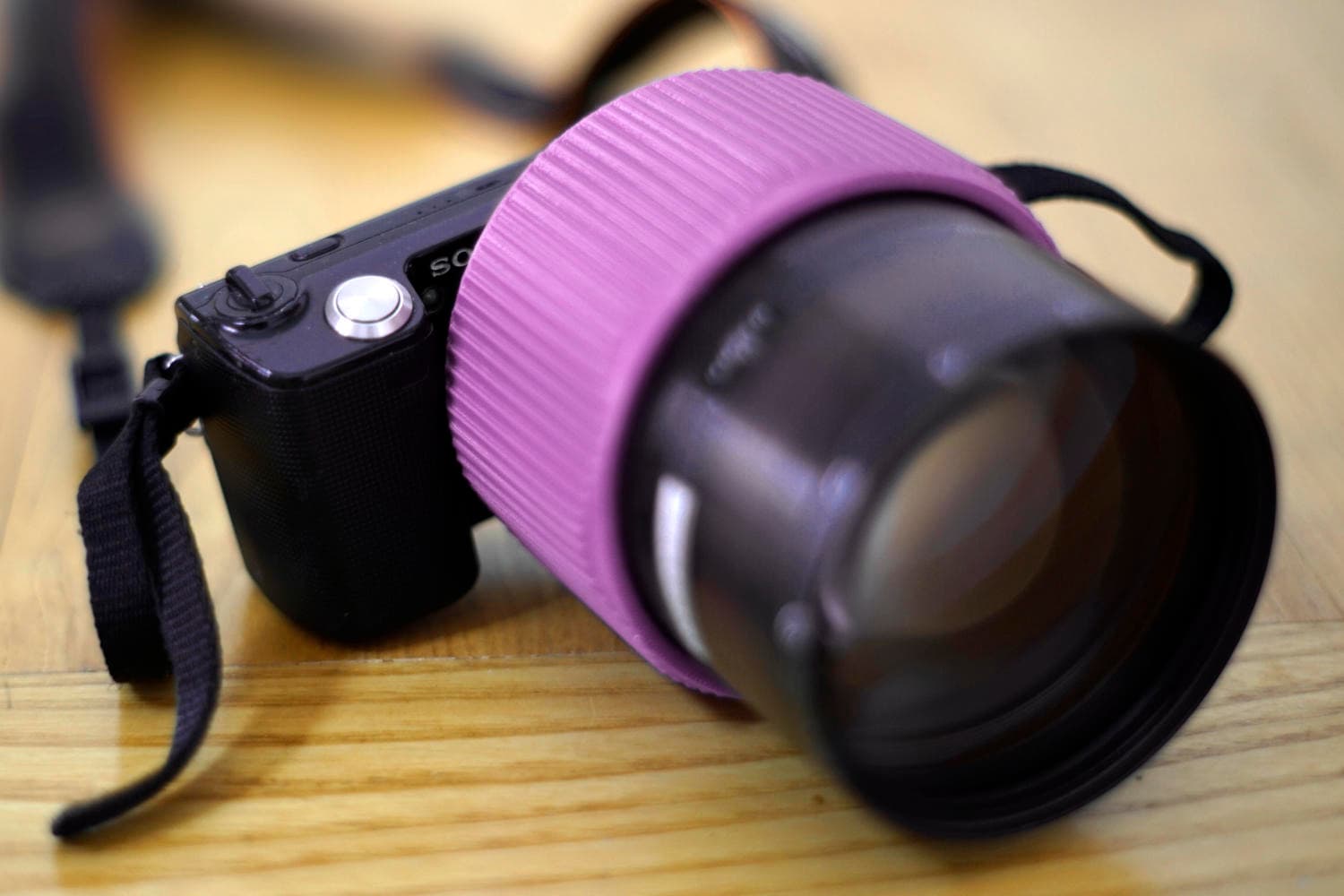
Focusing E-Mount Adapter for Ultrafast Lenses
A helicoid mount that lets huge-thread, iris-less ultrafast projector lenses actually focus on a Sony E-mount body.
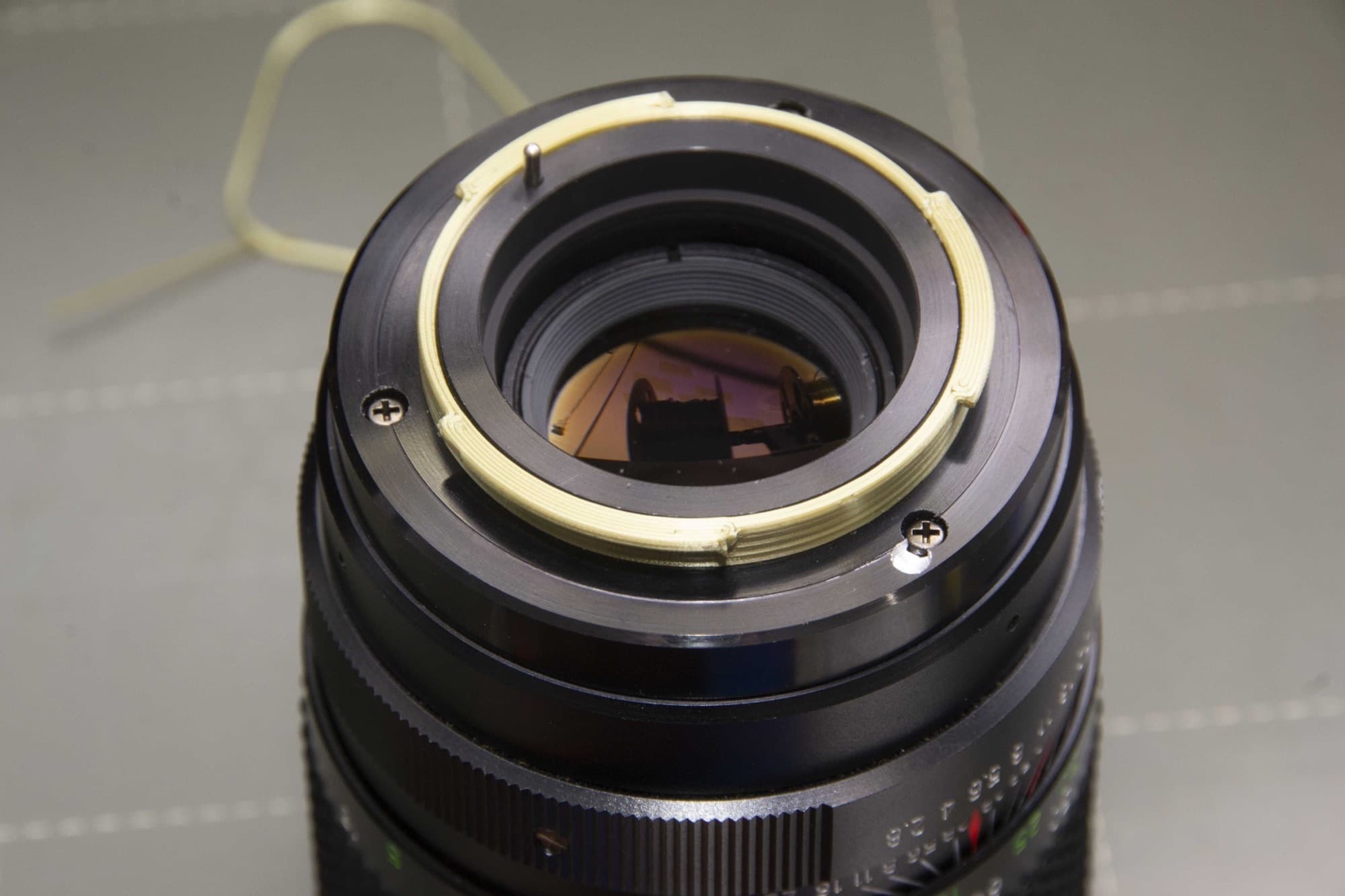
M42 to Nikon F-Mount Lens Adapter
Mount an old M42-thread lens on a Nikon F-mount body while keeping infinity focus.
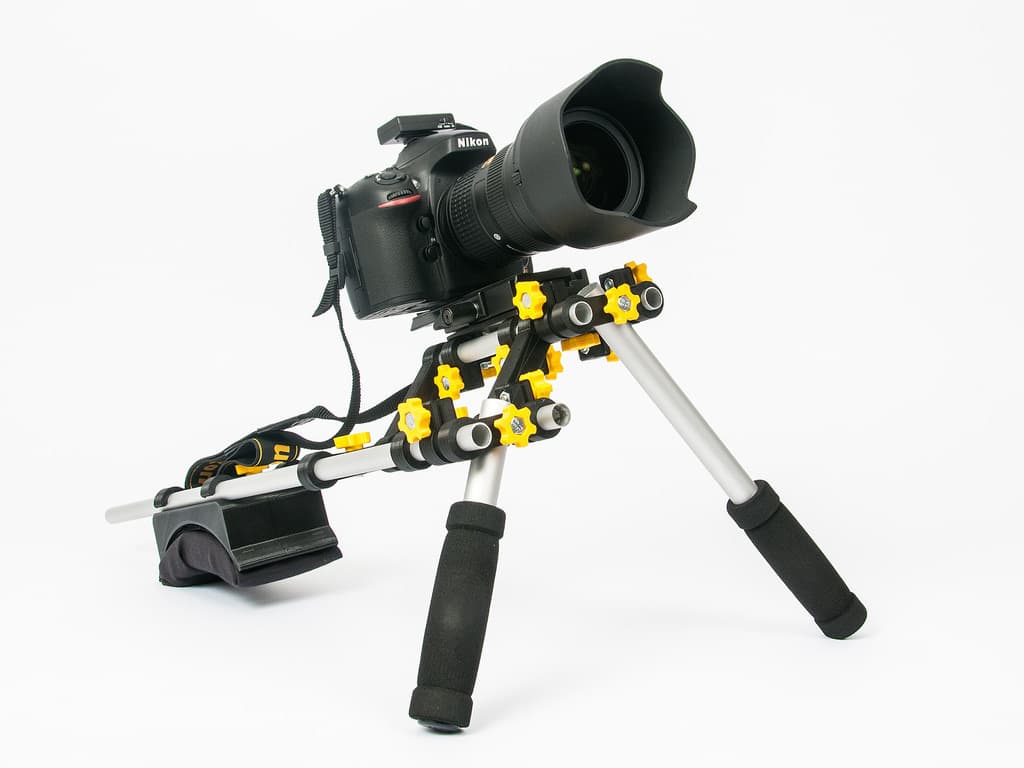
DSLR Shoulder Rig
A modular, 3D-printed shoulder rig for stabilizing DSLR video, built around industry-standard 15mm rod spacing.
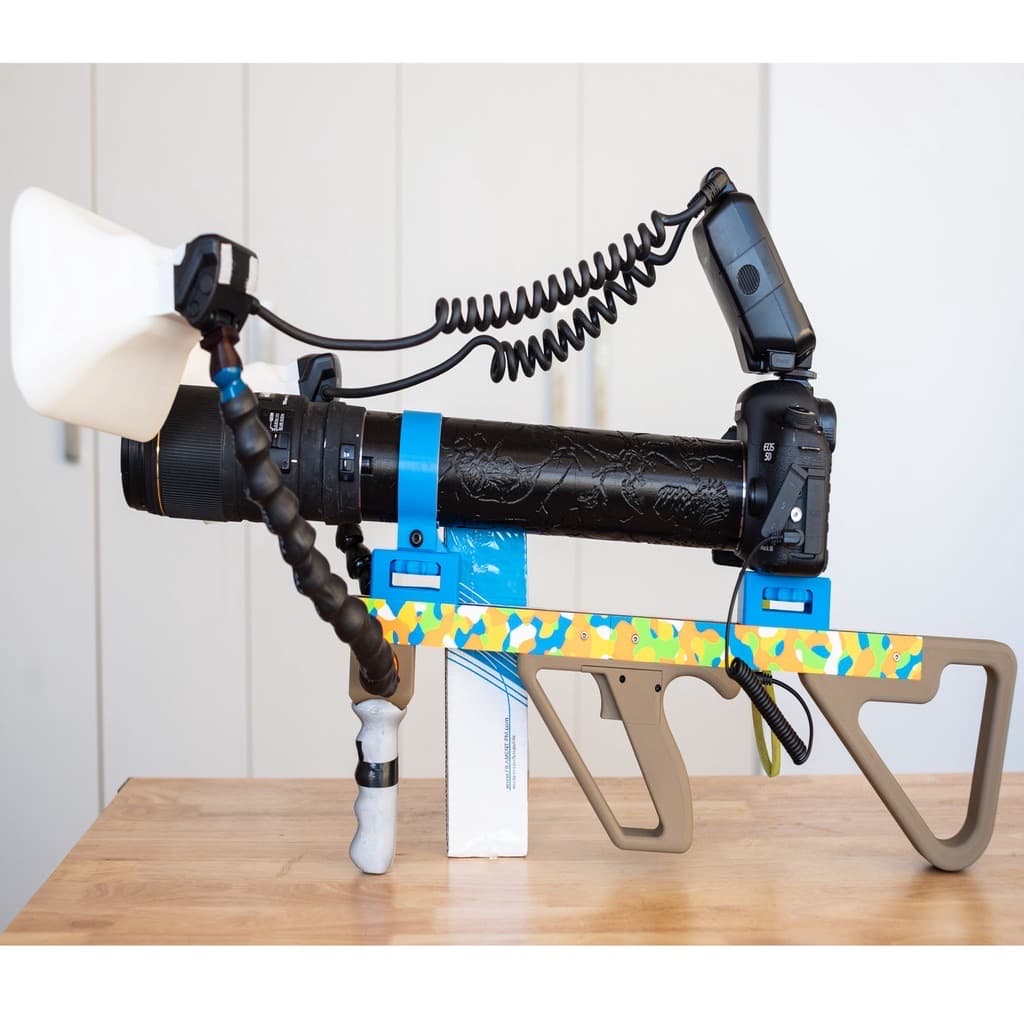
Macrosniper Camera Grip
A rifle-style two-handed grip with a two-stage shutter trigger, built for long lenses and macro rigs.
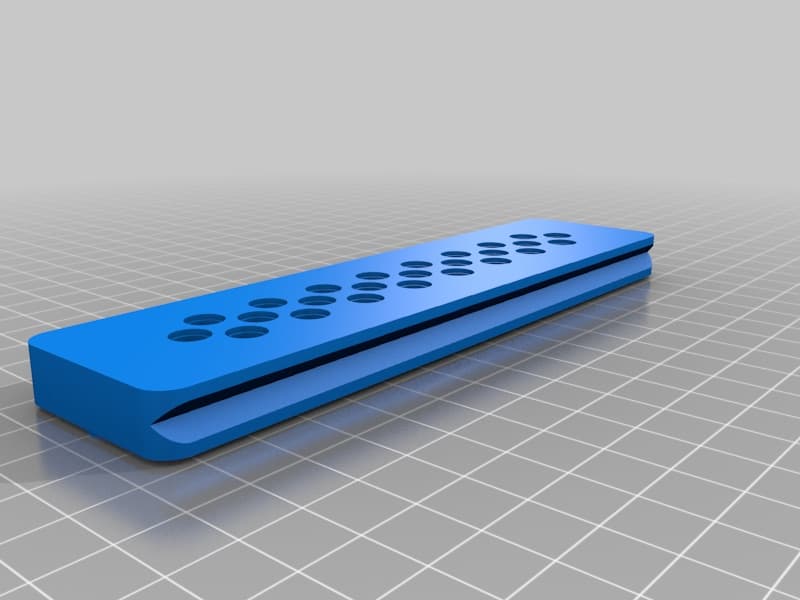
Parametric Arca-Swiss Quick-Release Plate
Arca-Swiss compatible quick-release plates in four sizes, from a 30mm single-slit to a 150mm long plate.
Articles
Longer pieces on the optics behind the pictures and the practical business of making your own camera hardware. Written to be read once and referred back to.
Crop factor and equivalence, without the arguments
Everyone agrees crop factor multiplies focal length. The argument starts one line later, at aperture, and it is mostly people answering different questions.
Technique4 August 202610 min readThe 500 rule is broken, and the NPF rule is why
A rule of thumb from the film era, applied to a 45 megapixel sensor, will reliably give you trailed stars and a confident explanation of why they are fine.
Technique4 August 20269 min readHyperfocal focusing in practice
The technique works. The way it is usually taught puts infinity right on the edge of acceptable, which is the one place you do not want it.
Technique4 August 20269 min readND filters and the arithmetic of long exposure
Three different labelling systems for the same piece of glass, and a conversion that is one line of arithmetic once you stop trying to memorise a table.
Technique4 August 20268 min read
Every calculator, in one place
All of them are free and work without an account. Each page explains the concept behind the number, shows the formula it evaluates, and answers the questions that usually come next.
Lenses and optics
Everything that follows from focal length, aperture, and sensor size: how much of the scene is sharp, how close you can get, and where your lens stops resolving detail.
- Depth of FieldNear and far focus limits for a given aperture and distance.
- Hyperfocal DistanceThe focus distance that maximizes depth of field.
- MagnificationReproduction ratio for macro photography.
- Focus StackingNumber of frames needed to cover a subject.
- DiffractionThe aperture where diffraction limits sharpness.
- Field of ViewAngle of view for a sensor and focal length.
- Focal Length to AngleConvert focal length to angle of view, or back again.
- Working DistanceLens-to-subject distance at a given magnification.
- Sensor ComparisonCompare sensor sizes and crop factors.
- Equivalent Focal LengthFull-frame equivalent focal length and aperture.
Exposure and light
Trading shutter speed, aperture, and ISO against each other, and the special cases where the usual arithmetic needs help: dense filters, flash, handheld limits, and stars.
- Exposure TriangleEquivalent exposure settings when you change aperture or ISO.
- ND FilterNew shutter speed after adding a neutral density filter.
- Flash ExposureGuide number based flash exposure.
- Handheld Shutter SpeedSlowest shutter speed you can shoot handheld without shake.
- Star Trails (NPF Rule)Maximum exposure time before stars start to trail.
Planning and output
The maths that happens either before you shoot or after, when the question is how long a sequence runs or how large a file will print.
Frequently asked questions
- Is any of this free?
- All of it. There is no account, no paid tier, and no download limit. The calculators and utilities are free to use, and every model file on a project page can be downloaded directly without signing up for anything.
- Do the utilities upload my photos anywhere?
- No. The EXIF reader and shutter count tool both parse the file in your browser using JavaScript. The photo is read from your own disk into memory on your machine and is never sent to a server, so nothing is stored or transmitted.
- Do I need a 3D printer to use the site?
- Only for the projects section. The calculators and utilities are useful whatever gear you own. If you do want to build the hardware, a basic filament printer is enough for almost everything catalogued here, though the lens adapters benefit from a well-calibrated machine because the threads have to fit.
- Can I sell parts printed from these models?
- That depends entirely on the licence of the individual design, which is stated at the bottom of each project page along with a link to its full text. Several of the community designs are shared under non-commercial Creative Commons terms, which permit personal printing but not selling the result. Check the licence before you sell anything.
- How accurate are the calculators?
- They evaluate the standard optical formulas rather than interpolating a table, and each page prints the equation it used so you can verify it. The usual caveats of the thin-lens model apply, particularly at very close focus distances, and where a convention has to be chosen, such as the circle of confusion for depth of field, the page says which one it used and why.
- Can I contribute a design or a correction?
- Yes, and corrections are especially welcome. If a calculator disagrees with your own measurements, or a printed part does not fit the camera it claims to fit, we want to hear about it. The contribute page explains how to get in touch.
Built in the open
OpenCameraLab is put together by photographers who print their own gear and got tired of paying accessory prices. If you have designed something useful, found a mistake in the maths, or printed one of these parts and learned something worth writing down, we would like to hear from you.